HOME - Deflamenco.com   search
17th May 2012
map shopping cart help


Flamenco Festival USA
"Four Elements"

Friday, January 28, 2005.
City Center, New York City.


Coverage of the Festival Flamenco USA is sponsored by Arte Fyl Dance Shoes

Text : Mona Molarsky

Contemporary take on flamenco for the big stage

Dancers: Carmen Cortés, Alejandro Granados, Carlos Rodríguez & Rocío Molina. Guitar soloist: Gerardo Nuñez. Other guitarists: Rafael Rodríguez & Paco Cruz. Vocalists: David Lagos & Jesús Méndez. Percussion: Nacho Arimani. Saxophone: Perico Sambeat. Stage director: Jacqulyn Buglisi. Music director: Gerardo Nunez. Costume Designer: Miguel Adrover. Lighting Designer: Clifton Taylor


There wasn't a spare ticket to be had on Friday night, when the red velvet curtain went up on the Flamenco Festival New York's production of "The Four Elements." City Center Theater, a 1920s neo-Moorish confection where prima ballerina Maria Tallchief once danced with the New York City Ballet, was packed with the usual New York dance crowd. The audience was decked out in everything from mink coats to denim and t-shirts. Along with English and Spanish, snippets of Russian, German and French ricocheted off the art deco walls. But few of New York's flamencos were to be seen in the crowd. Some of the lucky ones had attended the sold-out Four Elements Gala the previous evening. Others were saving their dollars for the Enrique Morente, Tomatito, Carmen Linares and Diego Carrasco performances coming up in February.

But New York's dance devotees, who tend to be as fluent in Martha Graham, Merce Cunningham and Alvin Ailey as they are in Marius Petipa and George Balanchine, were wildly appreciative of the four fine artists who presented a contemporary take on flamenco for the big stage.

The curtain rose on a vast, dark space--more desolate SoHo warehouse than sociable bar in Madrid. Four black-clad figures huddled on stools in the spotlight. They pounded their heels in a stark, Mario Maya style introduction, as if to say, "We are here as percussionists! Drumming is the global language!"

Rising, they stretched their long white arms toward the rafters, abruptly contracting stretched-out fingers into fists. They fell into off-center turns--a la Martha Graham--their pale faces, masks of angst. Upstage left, the guitarists, singers and palmeros hovered like ghosts in the murky distance. So we, the audience, were put on notice. Tonight's flamenco would be an expression of loneliness, a parable of four separate planets, each whirling through space in its own cold orbit.

An up-to-the-minute technological feel that was at once fascinating and distracting…

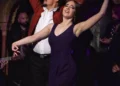
Carmen Cortés
Rocío Molina
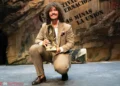
Alejandro Granados
Photos: © Javier Suarez

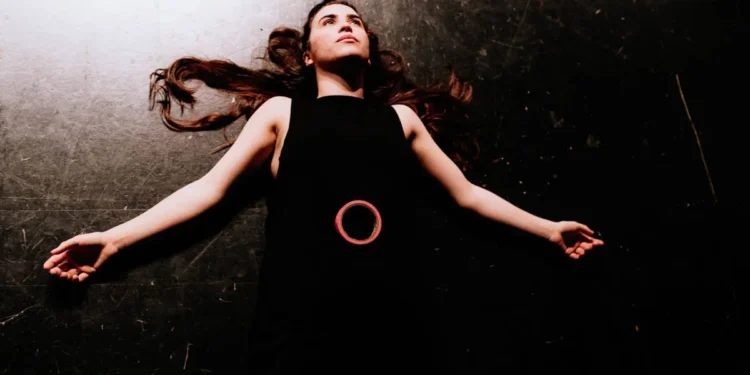
This opening statement gave way to a lyrical guajira. Rocío Molina, wearing liquid blue that broke into a pale froth of ruffles, personified the element of water in a tribute to flamenco's transatlantic influences. Her soft, white arms were fluid and feminine. Her round hips evoked the plentitude of seaports: from her native Málaga to old Havana. The bata de cola of her gown followed her body like water pouring off a swimmer. Guitarist Paco Cruz was equally in his element with this lacy, Latin showpiece. Projected behind the dancers, shimmering images of water gave the production an up-to-the-minute technological feel that was at once fascinating and distracting. But Molina's tour-de-force was greeted with enthusiastic applause and shouts from the audience.

Next, onto the modernist Cuban beach stepped Alejandro Granados, dressed in the red-brown earth tones of Andalusia. He moved through a languid duet with Molina, his gaze fixed on a distant point. The two didn't speak or even seem to see each other. They were, after all, different elements, dancing on different continents.

As Molina floated off stage, the sounds of tribal chanting rose through the theater's sound system. Evoking both African slave song and Native American pow-wow, the sounds swelled then faded into the live rhythms of a huge tom-tom, played by percussionist Nacho Arimani. So began a "seguiriya" for the twenty-first century. And by taking this most profound and purely Gypsy part of the flamenco tradition and re-imagining it as a generic tribal expression, these artists seemed to choose the seguiriya's universality over its unique, distinctive power.

Granados danced, his somber face tilted up toward the heavens, searching, perhaps, for God. He is the consummate dancer, masculine but not menacing, at one with the music; his compás is as natural as the rain. And if his seguiriya, danced to the guitars of Paco Cruz and Rafael Rodríguez and the song of David Lagos and Jesús Méndez, lacked the emotional intensity of the truly great seguiriyas, it's hard to blame anyone. This precise form was born in the metaphorical plains of Andalusia, in front of a campfire's embers, where a lone Gypsy faced the abyss of midnight. Few artists have managed to take the seguiriya out of its natural habitat and give it life on the big New York stage. The klieg lights alone are enough to extinguish its fragile beauty.

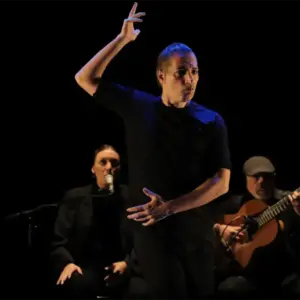
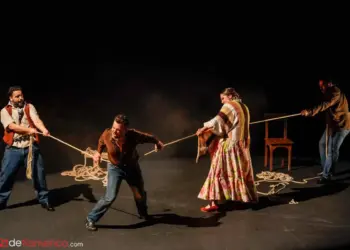
Granados' Seguiriya was followed by a bluesy Nana, or lullaby, danced by Rocío Molina and Carlos Rodríguez, accompanied by Perico Sambeat's saxophone. As if spilling from the mouth of the sax, a smoky yellow serpent slithered across the back-lit screen, while Rodríquez, in white, partnered Molina, in blue. Rodríguez, who personified air, is small, wiry and in perfect control, a young cat leaping from chair to table. As the palmeros clapped in syncopation, Rodríquez spun through a series of perfect pirouettes and chaînés, displaying his ballet training to impressive effect. With the bravura of a young Antonio Gades, he then danced, arms akimbo. His rapid-fire taconeo was like flint striking sparks off the floor. As Granados had, he partnered Molina coldly, rarely meeting her eyes; a brilliant asteroid, following his own private trajectory.

That mysterious power that makes somebody give up hearth and home for the uncontrollable magnet of flamenco

The vituostic guitar of Gerardo Núñez was showcased in a musical interlude. Núñez possesses an incredible facility and weaves a fine Belgian lace out of tremolos. I suspect that most in the audience, who were not guitarists themselves, let their minds wander elsewhere during his elegant solo. Aficionados of guitar technique, however, must have been suitably awed.

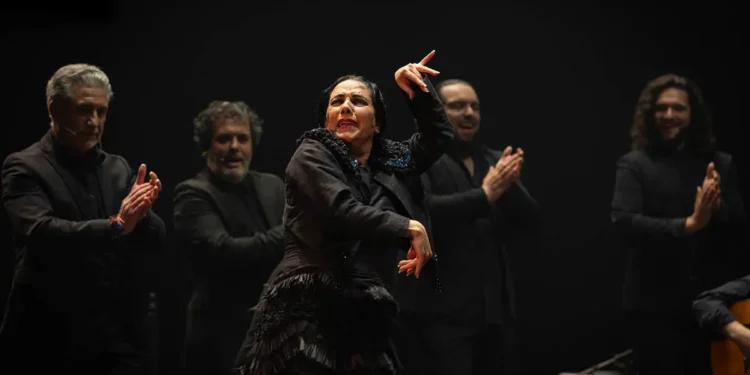
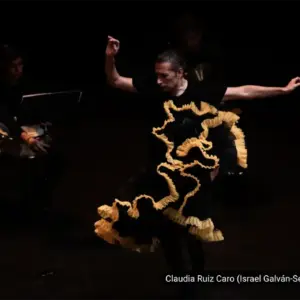
Spirited Tangos danced by Granados and Rodríguez and accompanied by Paco Cruz on guitar, offered another opportunity to admire both men's grace and ease, and led into a sensual soleá performed by Carmen Cortés, wrapped in red silk and fringe, as the element of fire. Of the four dancers, Cortés is the most traditionally flamenco. Accompanied by Núñez on guitar and Lagos' and Méndez's vocals, she seemed to embody the soleá. Her firm, lithe arms were a vision of beauty. A blaze of yellow satin underskirts licked through the red fringe at her ankles. For once, the audience was in danger of being swept up in the pull of the music. This, after all, is what it's all about. That mysterious power that makes somebody give up hearth and home for the uncontrollable magnet of flamenco. This is the thrilling moment, the moment when the fiesta begins to take shape. If only there could have been more of it!

All too soon, the fin de fiesta arrived. A jazzy bulería led by Sambeat's sax. While golden flames were projected over their heads, the four dancers presented themselves in their final flamenco tour de forces. For the first time, a smile spread across Granados' handsome face. Were we having fun yet? Well, OK--at last!

by Mona Molarsky @2005. All rights reserved.


Gerardo Núñez
'Andando el tiempo'


Store in Madrid
c/ Moratín, 6
28014 Madrid
+34 912987045
Contact - Advertising - Subscribe
deflamenco en tu email
pago seguro. Tienda on-line flamenco
 
© 2003 Tintes Flamencos S. L. Todos los derechos reservados - CIF - B83546655.
Included in the Official Registry of mail-order businesses (NEVA) 2003/0337/13/28/4/V