Bienal de Flamenco 2010
 
HOME - Deflamenco.com   search
3rd September 2010
map shopping cart help


Thirty-ninth Caracolá Lebrijana

Saturday, July 17th, 2004. 11:00pm. San Francisco Convent, Lebrija (Sevilla)


Cante: Miguel Funi, Manuel de Paula, Pepe Montaraz, Inés Bacán, Esperanza Fernández, Arcángel.
Guitar: Carbonero de Jerez, Antonio Moya, Miguel Ángel Cortés, Antonio Malena.
Dance: Concha Vargas, cante: María Peña, Jesús de la Frasquita

If this year’s Potaje de Utrera was an extravaganza worthy of Hollywood, artistic considerations aside, the organizers of the thirty-ninth edition of the Caracolá de Lebrija went in the direction of an excessively homegrown batch of performers on the bill. Anyone who doesn’t think so has only to ask the hoards of people who stayed away this year. And there was no football match on TV.

At the appointed hour not half the seats were occupied in the spacious athletic field of the San Francisco Convent, which normally is a bee-hive of activity for the Caracolá, nearly rivaling the Jerez Fiesta de la Bulería. The great majority of audience members were from town, no surprise considering the chauvinist orgy about to unfold. These are of course considerations not relevant to the individual artists’ performances, but they are nonetheless important issues in this fourth year of the second millennium when new formulas are being sought to avoid the disappearance of cante festivals.

Is there anyone able to explain why festivals must
continually grow until they become ungainly monsters?

Manuel de Paula
Arcángel

The first singer from Lebrija to come on stage was the little-known José Sánchez Ruiz “Pepe Montaraz”, a singer in whose honor there exists one of the town’s most active flamenco clubs. With a pleasantly rough voice, typical of the so-called “festival era” of the nineteen-sixties and seventies to which this man belongs, he demonstrated his great knowledge of cante with caracoles, tientos tangos including those of Triana, malagueñas of el Canario, el Mellizo and Trini, soleá de Triana and fandangos, accompanied on the guitar by Carbonero de Jerez.

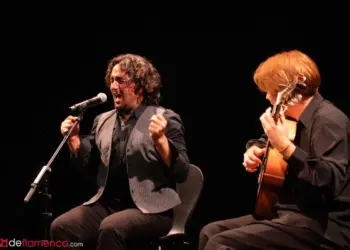
To introduce another Lebrija singer, Inés Bacán, emcee Manuel Curado spoke some moving words about her late brother Pedro whose absence the lady seems to be mourning with each note she sings. With a crude sound that was almost painful to experience she made her way through soleá and siguiriyas, short on technique, long on feeling. Bulerías in the Lebrija style to end, and every step of the way the splendid guitar of Antonio Moya, Pedro Bacán’s most important disciple.

Manuel Valencia Carrasco, “Manuel de Paula” is another Lebrija singer few outsiders are familiar with. His star rose briefly in the nineteen-seventies when he made a record with contemporary touches as was the order of the day, disappearing from the public eye not long afterwards. With the guitar of his cousin Antonio Malena, he sang soleá. taranto, fandangos with neither light nor amplification due to a massive power outage, bulerías with pure Lebrija touches and the “romance” sound typical of this town’s cante.

Esperanza is a work in progress, but with
each performance she is more convincing.

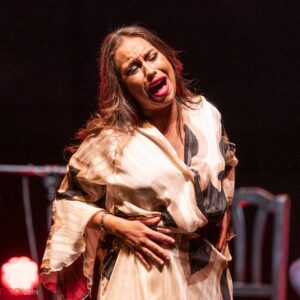
Esperanza Fernández was the first non-local figure of the night, but her strong family ties with Lebrija through the Peñas, and her artistic collaboration with pianist Dorantes, caused her to be received as a daughter of Lebrija. She had some fine moments which seemed to belie her confession that she was “a little nervous since it was the first time on stage alone at the Caracolá”. Esperanza is a work in progress, but with each performance she is more convincing. The Granada guitar of Miguel Ángel Cortés accompanied her alegrías including some styles of Pinini, in the little-used “A” position. Soleá and siguiriya with alternative tuning. This practice known as “scordatura”, so fashionable among the new generation of guitarists, consists of tuning the strings in an unaccustomed way, in this particular case giving an agreeably grave resonance which added dimension and color without going out of character. Bulerías with dance included rounded off this woman’s performance and brought the audience to its feet.

Inés Bacán & Antono Moya
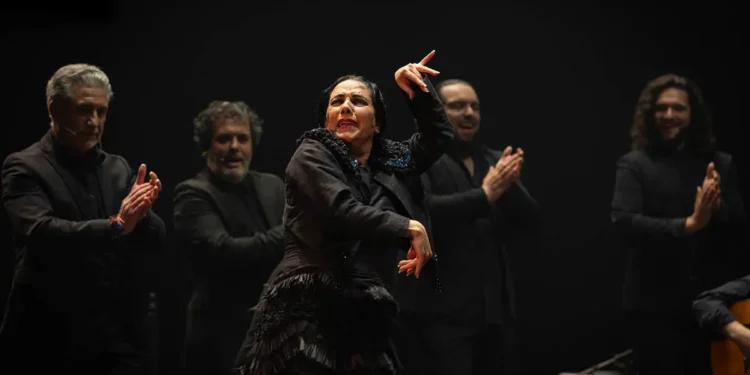
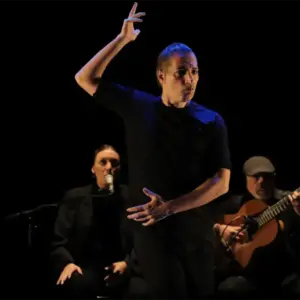
Concha Vargas

Arcángel, the singer from Huelva, has this year undergone the final transformation from young hopeful, to established star. His dance card is full, the price tag is high and the number of his fans constantly on the rise. With the musical backup of Miguel Ángel Cortés he employed his fascinating sweet voice to interpret alegrías which included those of Córdoba, and tangos with verses more common to tientos, perfectly adapted. For siguiriyas he managed to find a somewhat less sweet delivery to demonstrate his wide knowledge of this cante, but without quite raising any of the audience’s gooseflesh. As is always the case with this young singer, he best moment was in fandangos de Huelva, with all the flavor of his home-town and plenty of technique to get the job done.

After intermission, Miguel Peña Vargas “El Funi”. The much-admired singer and dancer of festive forms who conserves his youth, elegant dance style and white scarf around the neck, delighted his audience with a series of cantes, most notably “romance”, a form cultivated by the Peña family, and his renowned personal touch for bulerías.

The aggressive flamenco projection of dancer Concha Vargas, also from Lebrija, for “romance” with the accompaniment of Antonio Moya and the fresh but knowledgeable cante of brother and sister María Peña and Jesús de la Frasquita from Utrera rounded out and wrapped up the night.

Is there anyone able to explain why festivals must continually grow until they become ungainly monsters rivalling an Oscar presentation? Can we not be offered a greater variety of artists, both young and veteran, famous without being super-stars? Can festivals not be held in more traditional settings? Is there no way for once and for all to keep cante festivals from disappearing altogether?

Text & photos: Estela Zatania

More information:

XXXVIII Caracolá lebrijana - Lebrija

 
Store in Madrid - Contact - Advertising - Subscribe
deflamenco en tu email
pago seguro. Tienda on-line flamenco
© 2003 Tintes Flamencos S. L. Todos los derechos reservados - CIF - B83546655.
Included in the Official Registry of mail-order businesses (NEVA) 2003/0337/13/28/4/V
Design by Krama, Madrid