Auditorium Parco della Musica
– Rome (Italy)
September 13 – 23, 2005
:
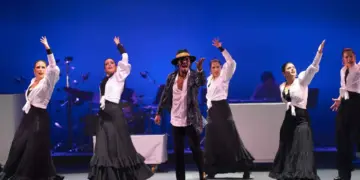
Tomatito Sexteto, Gerardo Núñez Cante: Enrique Morente, Miguel Poveda, Carmen
Linares Dance: Israel Galván
Text:
Sonia Jiménez Navarro
Photos: Moreno Maggi
The two weeks of the first flamenco festival of Rome
went by like a flash. Between the 13th and the 23rd of September
the Italian capital’s Auditorium Parco della Musica
was witness to such representative personalities as Tomatito,
Enrique Morente, Israel Galván, Miguel Poveda, Carmen
Linares and Gerardo Núñez. For this first celebration
of flamenco the Italians showed absolute energy and interest
for an art form that goes way beyond Spanish clichés
of castanets and long ruffled train dresses.
For many years Italian flamenco fans, teachers, dancers,
guitarists or just fervent followers have dreampt of a festival
entirely devoted to flamenco. Thanks to the efforts of Fondazione
Musica per Roma, in collaboration with the Spanish cultural
ministry and the Spanish embassy, with the support of the
Spanish tourist office in Rome, it has been possible to make
this dream a reality. In the words of the artistic director
of ¡Flamenco!, Juan Angel Vela del Campo, music critic
of El País, “in these two weeks of the festival
we’ve been able to bring the best singers, guitarists
and dancers to an ideal venue, ‘the temple of music’,
the Roman auditorium”. In this way each show was complete
in the three areas of flamenco. In addition to the shows,
there were parallel activities that included dance and guitar
workshops given by the artists, a sampling of gastronomical
specialties and a tablao set up in a typical Spanish restaurant
which featured Italian flamenco dance groups.
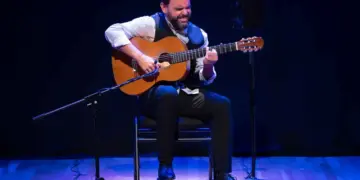
TOMATITO (Tuesday, September 13th )
The way he knows how to do it, with decision, simplicity,
never falling into the superficial. Tomatito opened the first
edition of ¡Flamenco! with all the tickets sold. The
Sinopoli hall was filled with Italian flamenco fans who didn’t
want to miss the festival’s first night with one of
flamenco’s most representative figures on the international
level. Tomatito took us on a tour of his last record “Aguadulce”
which fuses flamenco and jazz. With the lights dimmed and
the audience holding its breath, the star appeared at center-stage.
He started out with alegrías making it clear he was
the boss as soon as he played the first strum. Afterwards,
Juan de Juan came on with a flourish of footwork to heat up
the atmosphere. Tomatito remembered his Levante home with
tarantas, but also bulerías. He played a Turkish song
and ended with rumba. Juan de Juan returned for soleá,
stronger than Katrina, leveling the Auditorium and drawing
olés with all sorts of different accents, but the same
emotion. The musician from Almería not only charged
up the audience, but got them jumping out of their seats doing
palmas, footwork or singing along. Bernardo Parrilla accompanied
on the violin, Diego Amador on electric bass, mandolin and
voice, El Cristi on the guitar and percussion with Lucky Losada,
all joining forces to make a great opening night for the festival.
ENRIQUE MORENTE (Wednesday, September 14th )
The next date was with the maestro Enrique Morente, in the
words of Tomatito, “the last dinosaur”, the singer’s
singer and current patriarch of cante. It was the same hall
as the previous night with Tomatito, but not entirely full.
Nevertheless, the man from Granada showed why he is considered
a revolutionary figure in flamenco, searching for tradition
in creation. In the barely 70-minute long recital he went
through the pieces from his last recording, “El pequeño
reloj”, which takes its name from a poem by León
Felipe and tries to recuperate some recordings of old flamenco.
Other verses set to flamenco were also heard from such classic
poets as Gustavo Adólfo Bécquer and Francisco
de Quevedo. It was an assortment of original material and
the most pure forms of cante including malagueñas,
seguiriyas, cantiñas and fandangos. But what most grabbed
the audience were the opening and the closing of the concert
when Morente sang a capella, with feeling and energy for a
very intimate moment. An moment of fusion with the audience
creating an magical atmosphere that only good flamenco can
produce. He was accompanied by guitarist Niño Josele,
percussionist Bandolero, palmas and vocals by Antonio Carbonell,
Pepe Luis Carmona and Angel Gabarre.
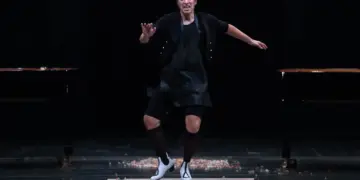
ISRAEL GALVÁN (Thursday, September 15th )
After guitar and voice, it was time for dance. The only show
whose main attraction was dance was “Arena” of
Israel Galván. According to J. A. Vela del Campo, artistic
director and chief of programs, “the decision to have
Israel Galván for Rome’s first flamenco festival
was a question of style, he’s the most innovative dancer
of the moment, with a perfect feeling for the foundations
of flamenco dance”. In his show “Arena”
there is also guitar and cante, with the special participation
of Enrique Morente via video, and Miguel Poveda on stage,
as well as the Andalusia youth orchestra to interpret pasodobles.
The audience was disconcerted by Galván at first, but
became more and more interested as they understood what a
bullfight represented for the dancer, and at the end they
broke into emotional applause. In his Rome debut the dancer
from Seville provoked a variety of reactions in the audience
that was expecting the most pure sort of flamenco interpreted
in the most traditional manner. But Galván won them
over with his perfect control, his technique of working with
form and movement, representing the bull, the bullfighter
and the spectators, creating the atmosphere of an actual bullfight
and winning “two ears” at the Sala Petrassi.
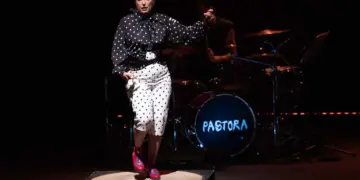
MIGUEL POVEDA (Friday, September 16th )
The singer from Badalona had the Roman audience in his pocket
as soon as he appeared on stage. Accompanied by guitarist
Alfredo Lagos he began with alegrías and the rhythm
of “tirititrán tran tran”, demonstrating
that despite his youth, Poveda is a singer of great talent,
precision and energy, but especially, sincere and humble.
The singer presented a recital of classic cante made up of
traditional themes, and some of his own, all interpreted with
great mastery and that exquisitely pure virtuoso voice that
makes him so different from other singers. He interpreted
martinete, seguiriyas, malagueña, cantiñas and
fandango, but the most exciting number was a selection of
fragments from traditional verses by Quintero, León
and Quiroga that raised gooseflesh throughout the audience.
The singer was accompanied by the percussion of Isaac Viqueras,
the palmas and voice of Encarna Anillo and Miguel Angel Soto
“Londro” who faced off with some serious singing
between the two of them. To liven up the closing minutes of
the show, Seville dancer Manuela Ríos appeared to satisfy
the Italian audience’s longing for dance. During the
show, Poveda thanked the audience, expressed his affection
for Rome and showed himself to be a perfectly natural person,
without gimmicks or airs.
GERARDO NÚÑEZ (Thursday, September
22nd )
After a 5-day respite, too long for the Italian audience hungry
for flamenco, Gerardo Núñez appeared on the
stage of the Sala Petrassi over a half-hour late. Dressed
all in black, guitar in hand, he opened the concert with “Yerma”,
a composition from his last recording “Andando el tiempo”,
followed by soleá por bulería with the accompaniment
of Pablo Martín on double bass and Angel Sánchez
“Cepillo” on percussion. Dance couldn’t
be absent in this recital with Italians’ interest so
high, and this time it was Carmen Cortés who made the
Auditorium shimmy and shake. She was strong and dynamic with
the command of those who have had years of experience on a
variety of stages. She won over the Italian audience with
her strong, energetic compás. After interpreting several
pieces from Gerardo’s last recording of flamenco mixed
with jazz, there was the typical solo spot for each musician.
Even singer Jesús Méndez participated, and to
end the two-hour concert the quintet got going with bulerías
for an unforgettable show in the Italian capital.
CARMEN LINARES CON GERARDO NUÑEZ TRÍO
(viernes, 23 de septiembre)
Carmen Linares rounded out the trio of singers chosen for
this first festival. The Andalusian singer was in charge of
closing out the series with a recital of songs from her most
recent work, “Un ramito de locura“(2002). The
recital opened with bass-player Pablo Martín who set
the mood. After that introduction, the versatile Carmen Linares
appeared on stage to take the audience to the most pure type
of cante. Her strong voice filled the Sala Petrassi reaching
to the farthest corner. But she wasn’t alone for this
closing night – she was accompanied by Gerardo Núñez,
who we’d enjoyed the night before, and musicians Pablo
Martín on double-bass and Ángel Sánchez
“Cepillo” handling the percussion. It was a magical
night. The team of Linares-Núñez worked, they
managed to achieve that flamenco state which for many is the
main source of life. Carmen Linares, the vocal seductress,
full of shading and musicality, created those human emotions
that can only be transmitted by flamenco. Along with the Gerardo
Núñez trío we enjoyed a unique night,
impossible to repeat, to close the first flamenco festival
of Rome in grand style.
Bernard Shaw said that mirrors are for seeing our
faces, and art for seeing the soul. In this first festival
we were able to peer into the soul of each of the artists
who performed in the Auditorium, because there was no shortage
of art. Rome finally had what it deserved a long time ago,
its first flamenco festival. A long time has passed since
it was realized that Rome is not only a European capital,
but a flamenco capital. After that first aperitif on July
29th with Eva Yerbabuena, a sort preamble to the Festival,
prospects looked good, and it was a truly high-class festival
with flamenco’s most important stars in each respective
specialty. This project was a public success and left a good
impression with people looking forward to a repeat next year.
Auditorium Parco della Musica
– Rome (Italy)
September 13 – 23, 2005
:
Tomatito Sexteto, Gerardo Núñez Cante: Enrique Morente, Miguel Poveda, Carmen
Linares Dance: Israel Galván
Text:
Sonia Jiménez Navarro
Photos: Moreno Maggi
The two weeks of the first flamenco festival of Rome
went by like a flash. Between the 13th and the 23rd of September
the Italian capital’s Auditorium Parco della Musica
was witness to such representative personalities as Tomatito,
Enrique Morente, Israel Galván, Miguel Poveda, Carmen
Linares and Gerardo Núñez. For this first celebration
of flamenco the Italians showed absolute energy and interest
for an art form that goes way beyond Spanish clichés
of castanets and long ruffled train dresses.
For many years Italian flamenco fans, teachers, dancers,
guitarists or just fervent followers have dreampt of a festival
entirely devoted to flamenco. Thanks to the efforts of Fondazione
Musica per Roma, in collaboration with the Spanish cultural
ministry and the Spanish embassy, with the support of the
Spanish tourist office in Rome, it has been possible to make
this dream a reality. In the words of the artistic director
of ¡Flamenco!, Juan Angel Vela del Campo, music critic
of El País, “in these two weeks of the festival
we’ve been able to bring the best singers, guitarists
and dancers to an ideal venue, ‘the temple of music’,
the Roman auditorium”. In this way each show was complete
in the three areas of flamenco. In addition to the shows,
there were parallel activities that included dance and guitar
workshops given by the artists, a sampling of gastronomical
specialties and a tablao set up in a typical Spanish restaurant
which featured Italian flamenco dance groups.
TOMATITO (Tuesday, September 13th )
The way he knows how to do it, with decision, simplicity,
never falling into the superficial. Tomatito opened the first
edition of ¡Flamenco! with all the tickets sold. The
Sinopoli hall was filled with Italian flamenco fans who didn’t
want to miss the festival’s first night with one of
flamenco’s most representative figures on the international
level. Tomatito took us on a tour of his last record “Aguadulce”
which fuses flamenco and jazz. With the lights dimmed and
the audience holding its breath, the star appeared at center-stage.
He started out with alegrías making it clear he was
the boss as soon as he played the first strum. Afterwards,
Juan de Juan came on with a flourish of footwork to heat up
the atmosphere. Tomatito remembered his Levante home with
tarantas, but also bulerías. He played a Turkish song
and ended with rumba. Juan de Juan returned for soleá,
stronger than Katrina, leveling the Auditorium and drawing
olés with all sorts of different accents, but the same
emotion. The musician from Almería not only charged
up the audience, but got them jumping out of their seats doing
palmas, footwork or singing along. Bernardo Parrilla accompanied
on the violin, Diego Amador on electric bass, mandolin and
voice, El Cristi on the guitar and percussion with Lucky Losada,
all joining forces to make a great opening night for the festival.
ENRIQUE MORENTE (Wednesday, September 14th )
The next date was with the maestro Enrique Morente, in the
words of Tomatito, “the last dinosaur”, the singer’s
singer and current patriarch of cante. It was the same hall
as the previous night with Tomatito, but not entirely full.
Nevertheless, the man from Granada showed why he is considered
a revolutionary figure in flamenco, searching for tradition
in creation. In the barely 70-minute long recital he went
through the pieces from his last recording, “El pequeño
reloj”, which takes its name from a poem by León
Felipe and tries to recuperate some recordings of old flamenco.
Other verses set to flamenco were also heard from such classic
poets as Gustavo Adólfo Bécquer and Francisco
de Quevedo. It was an assortment of original material and
the most pure forms of cante including malagueñas,
seguiriyas, cantiñas and fandangos. But what most grabbed
the audience were the opening and the closing of the concert
when Morente sang a capella, with feeling and energy for a
very intimate moment. An moment of fusion with the audience
creating an magical atmosphere that only good flamenco can
produce. He was accompanied by guitarist Niño Josele,
percussionist Bandolero, palmas and vocals by Antonio Carbonell,
Pepe Luis Carmona and Angel Gabarre.
ISRAEL GALVÁN (Thursday, September 15th )
After guitar and voice, it was time for dance. The only show
whose main attraction was dance was “Arena” of
Israel Galván. According to J. A. Vela del Campo, artistic
director and chief of programs, “the decision to have
Israel Galván for Rome’s first flamenco festival
was a question of style, he’s the most innovative dancer
of the moment, with a perfect feeling for the foundations
of flamenco dance”. In his show “Arena”
there is also guitar and cante, with the special participation
of Enrique Morente via video, and Miguel Poveda on stage,
as well as the Andalusia youth orchestra to interpret pasodobles.
The audience was disconcerted by Galván at first, but
became more and more interested as they understood what a
bullfight represented for the dancer, and at the end they
broke into emotional applause. In his Rome debut the dancer
from Seville provoked a variety of reactions in the audience
that was expecting the most pure sort of flamenco interpreted
in the most traditional manner. But Galván won them
over with his perfect control, his technique of working with
form and movement, representing the bull, the bullfighter
and the spectators, creating the atmosphere of an actual bullfight
and winning “two ears” at the Sala Petrassi.
MIGUEL POVEDA (Friday, September 16th )
The singer from Badalona had the Roman audience in his pocket
as soon as he appeared on stage. Accompanied by guitarist
Alfredo Lagos he began with alegrías and the rhythm
of “tirititrán tran tran”, demonstrating
that despite his youth, Poveda is a singer of great talent,
precision and energy, but especially, sincere and humble.
The singer presented a recital of classic cante made up of
traditional themes, and some of his own, all interpreted with
great mastery and that exquisitely pure virtuoso voice that
makes him so different from other singers. He interpreted
martinete, seguiriyas, malagueña, cantiñas and
fandango, but the most exciting number was a selection of
fragments from traditional verses by Quintero, León
and Quiroga that raised gooseflesh throughout the audience.
The singer was accompanied by the percussion of Isaac Viqueras,
the palmas and voice of Encarna Anillo and Miguel Angel Soto
“Londro” who faced off with some serious singing
between the two of them. To liven up the closing minutes of
the show, Seville dancer Manuela Ríos appeared to satisfy
the Italian audience’s longing for dance. During the
show, Poveda thanked the audience, expressed his affection
for Rome and showed himself to be a perfectly natural person,
without gimmicks or airs.
GERARDO NÚÑEZ (Thursday, September
22nd )
After a 5-day respite, too long for the Italian audience hungry
for flamenco, Gerardo Núñez appeared on the
stage of the Sala Petrassi over a half-hour late. Dressed
all in black, guitar in hand, he opened the concert with “Yerma”,
a composition from his last recording “Andando el tiempo”,
followed by soleá por bulería with the accompaniment
of Pablo Martín on double bass and Angel Sánchez
“Cepillo” on percussion. Dance couldn’t
be absent in this recital with Italians’ interest so
high, and this time it was Carmen Cortés who made the
Auditorium shimmy and shake. She was strong and dynamic with
the command of those who have had years of experience on a
variety of stages. She won over the Italian audience with
her strong, energetic compás. After interpreting several
pieces from Gerardo’s last recording of flamenco mixed
with jazz, there was the typical solo spot for each musician.
Even singer Jesús Méndez participated, and to
end the two-hour concert the quintet got going with bulerías
for an unforgettable show in the Italian capital.
CARMEN LINARES CON GERARDO NUÑEZ TRÍO
(viernes, 23 de septiembre)
Carmen Linares rounded out the trio of singers chosen for
this first festival. The Andalusian singer was in charge of
closing out the series with a recital of songs from her most
recent work, “Un ramito de locura“(2002). The
recital opened with bass-player Pablo Martín who set
the mood. After that introduction, the versatile Carmen Linares
appeared on stage to take the audience to the most pure type
of cante. Her strong voice filled the Sala Petrassi reaching
to the farthest corner. But she wasn’t alone for this
closing night – she was accompanied by Gerardo Núñez,
who we’d enjoyed the night before, and musicians Pablo
Martín on double-bass and Ángel Sánchez
“Cepillo” handling the percussion. It was a magical
night. The team of Linares-Núñez worked, they
managed to achieve that flamenco state which for many is the
main source of life. Carmen Linares, the vocal seductress,
full of shading and musicality, created those human emotions
that can only be transmitted by flamenco. Along with the Gerardo
Núñez trío we enjoyed a unique night,
impossible to repeat, to close the first flamenco festival
of Rome in grand style.
Bernard Shaw said that mirrors are for seeing our
faces, and art for seeing the soul. In this first festival
we were able to peer into the soul of each of the artists
who performed in the Auditorium, because there was no shortage
of art. Rome finally had what it deserved a long time ago,
its first flamenco festival. A long time has passed since
it was realized that Rome is not only a European capital,
but a flamenco capital. After that first aperitif on July
29th with Eva Yerbabuena, a sort preamble to the Festival,
prospects looked good, and it was a truly high-class festival
with flamenco’s most important stars in each respective
specialty. This project was a public success and left a good
impression with people looking forward to a repeat next year.
Utilizamos cookies para asegurar que damos la mejor experiencia al usuario y obtener estadísticas en nuestro sitio web. Si continúa utilizando este sitio asumiremos que está de acuerdo. Más info:


 Text:
Text: