Flamenco on Fire 2026 Flamenco on Fire 2026
domingo, 28 junio 2026
  • [Soporte, publicidad]
  • [Sobre deflamenco]
  • [Faq]
  • [Tienda/Shop]
Revista DeFlamenco.com
Tablao Flamenco 1911 - Madrid
  • REVISTA
    • Noticias de Flamenco
    • Reseñas
    • Entrevistas
    • Especiales
    • Festival de Jerez
    • Opinión
    • De tablao en tablao
    • Moda flamenca
    • Más flamenco
  • AGENDA
    • Flamenco en Madrid
    • Flamenco en Barcelona
    • Flamenco en Andalucía
      • Flamenco en Sevilla
      • Flamenco en Jerez & Cádiz
      • Flamenco en Málaga
      • Flamenco en Córdoba
      • Flamenco en Jaén
      • Flamenco en Huelva
      • Flamenco en Almería
      • Flamenco en Granada
    • Flamenco en España (resto)
      • Flamenco en Aragón
      • Flamenco en Asturias
      • Flamenco en Baleares
      • Flamenco en Canarias
      • Flamenco en Cantabria
      • Flamenco en Castilla la Mancha
      • Flamenco en Castilla-León
      • Flamenco en Ceuta / Melilla
      • Flamenco en Extremadura
      • Flamenco en Galicia
      • Flamenco en La Rioja (Logroño)
      • Flamenco en Murcia
      • Flamenco en Pamplona
      • Flamenco en el País Vasco
      • Flamenco en Valencia
    • Flamenco en Europa
      • Flamenco en Francia
      • Flamenco en Alemania
      • Flamenco en Países Bajos & Bélgica
      • Flamenco en Italia
      • Flamenco en Reino Unido
      • Flamenco en Portugal
      • Flamenco en Suiza
      • Flamenco en Resto de Europa
    • Flamenco en América
      • Flamenco en Canadá
      • Flamenco en Estados Unidos
      • Flamencos en México / Centro América
      • Flamenco en América del Sur
    • Flamenco en el Mundo
      • Flamenco en África
      • Flamenco en Australia
      • Flamenco en Japón & Asia
    • Flamencos EN GIRANew
  • CURSOS
    • Cursos Flamenco online
    • Calendario Cursos de Flamenco (general)
    • Cursos Flamenco en Sevilla
    • Cursos de Flamenco en Jerez & Cádiz
    • Cursos Flamenco en Madrid
    • Cursos flamenco en Barcelona
    • Cursos Flamenco en Málaga
  • ARTISTAS
    • Cantaores & cantaoras
    • Guitarristas
    • Bailaores & bailaoras
    • Otros/Grupos
    • Compañias
    • Espectáculos
    • Management
  • MEDIA
    • Twitch – Flamenco live
    • Fotografías
    • Videos
  • GUÍA DE FLAMENCO
    • Escuelas y estudios de Flamenco
    • Tablaos flamencos
    • Teatros, Salas de Concierto
    • Peñas de Flamenco
    • Bares Flamencos, restaurantes
    • Moda Flamenca, complementos
    • Tiendas de Flamenco
    • Guitarrerias, luthiers
  • CATÁLOGO
    • Cds de flamenco
    • Libros de flamenco
    • Dvds de flamenco
    • Vinilos de Flamenco
  • Tablaos
    • Noticias
    • Madrid
      • Donde ver buen flamenco
      • Cardamomo
      • Tablao Flamenco 1911
      • Tablao flamenco La Carmela
      • Tablao Las Carboneras
      • Tablao de la Villa
      • Las Tablas Flamenco Madrid
      • Centro Cultural Flamenco de Madrid
      • Café Ziryab
      • Corral de la Moreria
    • Barcelona
      • Tablao Flamenco Cordobes
      • El Duende by Tablao Cordobes
    • Granada
    • Sevilla
  • [ENGLISH]
    • News
    • Show Reviews
    • Interviews
    • Special Reports
    • Flamenco Shows in MadridNew
      • Cardamomo Flamenco Madrid
      • Tablao 1911
      • Las Tablas Flamenco Madrid
      • Centro Cultural Flamenco de Madrid
      • Corral de la Moreria
      • Café Ziryab
    • Flamenco Shows in Barcelona
      • Tablao Flamenco Cordobes
      • El Duende by Tablao Cordobes
    • Special Festival de JerezNew
    • Flamenco fashion
    • More flamenco
    • Opinion
    • My Flamenco Year
  • Publicidad
  • –
No Result
View All Result
  • REVISTA
    • Noticias de Flamenco
    • Reseñas
    • Entrevistas
    • Especiales
    • Festival de Jerez
    • Opinión
    • De tablao en tablao
    • Moda flamenca
    • Más flamenco
  • AGENDA
    • Flamenco en Madrid
    • Flamenco en Barcelona
    • Flamenco en Andalucía
      • Flamenco en Sevilla
      • Flamenco en Jerez & Cádiz
      • Flamenco en Málaga
      • Flamenco en Córdoba
      • Flamenco en Jaén
      • Flamenco en Huelva
      • Flamenco en Almería
      • Flamenco en Granada
    • Flamenco en España (resto)
      • Flamenco en Aragón
      • Flamenco en Asturias
      • Flamenco en Baleares
      • Flamenco en Canarias
      • Flamenco en Cantabria
      • Flamenco en Castilla la Mancha
      • Flamenco en Castilla-León
      • Flamenco en Ceuta / Melilla
      • Flamenco en Extremadura
      • Flamenco en Galicia
      • Flamenco en La Rioja (Logroño)
      • Flamenco en Murcia
      • Flamenco en Pamplona
      • Flamenco en el País Vasco
      • Flamenco en Valencia
    • Flamenco en Europa
      • Flamenco en Francia
      • Flamenco en Alemania
      • Flamenco en Países Bajos & Bélgica
      • Flamenco en Italia
      • Flamenco en Reino Unido
      • Flamenco en Portugal
      • Flamenco en Suiza
      • Flamenco en Resto de Europa
    • Flamenco en América
      • Flamenco en Canadá
      • Flamenco en Estados Unidos
      • Flamencos en México / Centro América
      • Flamenco en América del Sur
    • Flamenco en el Mundo
      • Flamenco en África
      • Flamenco en Australia
      • Flamenco en Japón & Asia
    • Flamencos EN GIRANew
  • CURSOS
    • Cursos Flamenco online
    • Calendario Cursos de Flamenco (general)
    • Cursos Flamenco en Sevilla
    • Cursos de Flamenco en Jerez & Cádiz
    • Cursos Flamenco en Madrid
    • Cursos flamenco en Barcelona
    • Cursos Flamenco en Málaga
  • ARTISTAS
    • Cantaores & cantaoras
    • Guitarristas
    • Bailaores & bailaoras
    • Otros/Grupos
    • Compañias
    • Espectáculos
    • Management
  • MEDIA
    • Twitch – Flamenco live
    • Fotografías
    • Videos
  • GUÍA DE FLAMENCO
    • Escuelas y estudios de Flamenco
    • Tablaos flamencos
    • Teatros, Salas de Concierto
    • Peñas de Flamenco
    • Bares Flamencos, restaurantes
    • Moda Flamenca, complementos
    • Tiendas de Flamenco
    • Guitarrerias, luthiers
  • CATÁLOGO
    • Cds de flamenco
    • Libros de flamenco
    • Dvds de flamenco
    • Vinilos de Flamenco
  • Tablaos
    • Noticias
    • Madrid
      • Donde ver buen flamenco
      • Cardamomo
      • Tablao Flamenco 1911
      • Tablao flamenco La Carmela
      • Tablao Las Carboneras
      • Tablao de la Villa
      • Las Tablas Flamenco Madrid
      • Centro Cultural Flamenco de Madrid
      • Café Ziryab
      • Corral de la Moreria
    • Barcelona
      • Tablao Flamenco Cordobes
      • El Duende by Tablao Cordobes
    • Granada
    • Sevilla
  • [ENGLISH]
    • News
    • Show Reviews
    • Interviews
    • Special Reports
    • Flamenco Shows in MadridNew
      • Cardamomo Flamenco Madrid
      • Tablao 1911
      • Las Tablas Flamenco Madrid
      • Centro Cultural Flamenco de Madrid
      • Corral de la Moreria
      • Café Ziryab
    • Flamenco Shows in Barcelona
      • Tablao Flamenco Cordobes
      • El Duende by Tablao Cordobes
    • Special Festival de JerezNew
    • Flamenco fashion
    • More flamenco
    • Opinion
    • My Flamenco Year
  • Publicidad
  • –
No Result
View All Result
Revista DeFlamenco.com
No Result
View All Result
Home Revista Entrevistas

Interview with Carmen Calvo. Cultural minister

by DeFlamenco
5 05 2006
in Entrevistas, Interviews
Comparte en FacebookCanal TelegramComparte en Twitter

Interview
with

Carmen Calvo,
ministra de Cultura

Text:
David Calzado
Photo: Paco Manzano

from «Acordes de flamenco» magazine

Bright and early on a Monday morning in February…
The Minister of Culture doesn’t seem to have any
problem with the Monday morning doldrums that afflict
the rest of us, what energy! The list of questions and
the formal language duly prepared the previous day went
out the window with the first exchange. Carmen Calvo,
flamenco fan, jumps headfirst into her flamenco memories
and there’s no stopping her. As mothers love to
say “she always dresses so smartly this girl”.
This morning she’s wearing a casual knit jacket,
tight jeans and pointy-toed boots. A white silk scarf
falls elegantly from her neck. The shoulder-length hair
she constantly carresses is carefully coiffed, and her
dark eyes reveal her place of birth. Luis de Val was
right when he spoke of her similarity to Jackie Kennedy.
Carmen Calvo (Cabra, Córdoba, 1957) wants the
world to know that flamenco is the best raw material
her Ministry has to work with, and for this reason she
didn’t think twice when she gave her support to
the new national magazine Acordes de Flamenco. In the
hour-long interview the head of Culture talks about
her grandfather who took on a flamenco singer as his
protégée, the possibility of Madrid eventually
having a theater devoted exclusively to flamenco and
her dream of seeing Spain’s most universal art
form reappear on prime-time Spanish TV, “not in
the wee hours” as she points out. Although she
elaborates more about what ought to be rather than what
is, it looks like flamenco has a guaranteed future with
this lady.

How would you like to come
across in this interview, as a flamenco fan, an intellectual…?

One night when I went with Pedro Almodóvar to
hear Miguel Poveda, he told me he was a “flamencaholic”.
It was when that idea invented by the yanks started
circulating in Spain: “workaholics” etc.
Pedro said it because he needs flamenco, so with his
permission I hereby declare myself a “flamencaholic”.

Where does the interest in
flamenco come from?

My whole family always liked flamenco. My father used
to put on flamenco records for us because he said Andalusian
children had to listen to flamenco to train their sensibility
and ear for music. I’m one of three children,
two who like flamenco, and one who doesn’t. Then
there was my grandfather who was an intimate friend
of a great singer, Cayetano Muriel, “Niño
de Cabra”, who sang wonderful fandangos de Lucena.
Don Antonio Chacón gave him that nickname because
he heard him sing one day at an inn and exclaimed “What
a singer that ‘niño’ from Cabra,
and how well he sings fandangos!” Chacón
himself was supposed to be the best. My grandfather
was a sort of benefactor for Niño de Cabra.

Are you still able to keep
abreast of things?

I read in the reviews how flamenco is going, but it’s
not like before when I used to go to the best summer
festivals. The fact is, I just don’t have the
time. Sometimes I see festivals announced in Huelva,
somewhere in Cádiz, Córdoba, the triangle
of flamenco, and no offense intended to anyone, it’s
that area: Cádiz, Córdoba and Seville,
part of Granada as well, but Granada cante is different.
And look, the El Taranto flamenco club in Almería
is one of the best in the country. I was there with
Agujetas, incredible. Right now I don’t have time
to go and see singers when they perform. I really enjoy
watching a singer on stage because that’s when
they’re at their most professional, but of course
flamenco is an oral tradition, a spontaneous art from,
that’s why its authenticity is incomparable.

There must be some reason
why it’s so popular…

Flamenco is unlike any other art form. There’s
poetry, music, body language, special instruments and,
as Lorca said, it’s a world within a world. Flamenco
holds many truths, I wouldn’t know how to explain
it, that’s the mystery of creative endeavors.
And I think that’s why so many people like it.
I just got back from China and all they know about Spain
over there is flamenco. I think it’s similar to
negro spirituals, and that’s my own theory even
if it’s not that brilliant, I’ve always
thought flamenco is the Westernized spiritual. It’s
a complete artistic expression and it holds universally
understood truths, aside from the music, languages,
customs and borders. There’s no other explanation.
And if you stop and think, all the music being done
in Spain today has a large underlying percentage of
flamenco.

If you were to take me to
see flamenco tonight, where would we go?

[She doesn’t skip a beat]. To the Teatro Real,
Mercé is presenting his new record. That was
too easy. Because I love José, he’s a good
singer, he really knows flamenco, he was there from
the very beginning getting first-hand knowledge, and
furthermore, thanks to him a lot of people have discovered
flamenco. It’s very moving to think that Mercé’s
records are reaching so many young people, I’m
deeply grateful to him as a Spanish citizen and of course,
as minister, I thank him on my hands and knees. And
it’s only fitting that the presentation take place
at the country’s biggest theatre, the Teatro Real.
This is Spain, period. I think we do ourselves a favor
when we explore the truth behind some of our country’s
clichés. I don’t like cheap clichés,
but the truth found in the big picture is fantastic.
To travel throughout the world and the first thing people
talk to you about is flamenco, some Spaniards might
not like that, but I have to take my hat off, because
no other original musical expression or dance has so
identified Spanish culture.

Yesterday when I was interviewing
María Pagés, I asked what she would request
of the Cultural minister. For her, Spain needs an official
central theater to program and investigate flamenco
every single day of the year.

I completely agree with her and in fact, when I was
with the Junta I organized an Andalusian flamenco circuit
which put a lot of artists to work and we had a large
chain of the most important theaters in capital cities
offering a regular program of flamenco singing, dance
and guitar each season. That’s an initiative we
started six or seven years ago and it’s really
been a success. We’d like to do something like
that in all the Autonomous Communities, and one of our
goals has to be the creation of a permanent flamenco
center in Madrid. It’s just like my father said,
you are the children of Andalusia and you must savor
the sensibility, intelligence, originality and sheer
artistic acheivement of flamenco. Then, each one can
decide whether or not it’s interesting. It’s
hard to understand how children in this country have
no access to flamenco unless they consciously make that
choice.

Like you say, flamenco is
present in the music young people listen to.

Exactly. When you see the records the kids buy, they
all have a flamenco underpinning, no one can escape
it. And you wouldn’t believe some of the most
famous musicians who have been touched by it. I remember
when Prince went to Cádiz to savor the world
of Camarón. And to have reached that point, the
list of acknowledgements is interminable: Mairena, Chacón,
La Niña de los Peines, Manuel Torre and so many
others, but plenty of current artists are also responsible
for making this so adaptable. That’s why I gave
the Llave del Cante to Camarón, despite all the
protest, because of his great contribution, something
which is being carried on by people like Poveda and
Israel Galván who is incredible, I’ve been
following his career for about ten years, when we started
handling Seville’s Teatro Central.

One has the feeling Carmen
Calvo was more flamenco as counsellor than minister.

The thing is, I was counsellor for eight years and there
was time to do a lot of things, but I’ve only
been minister for one year and during this time I’ve
had to a great deal in a much wider range and with more
complexities. Many of the things I have to do now depend
on negotiations with others, with municipal governments
or communities, while as Counsellor the area of operations
was better defined – I took a decision and carried
it out. Everything is much more complicated now, but
I’m pleased with this last year and a half. But
I do believe that it must become policy to treat flamenco
as part of Spain’s cultural identity because flamenco
isn’t only popular in the south. The best flamenco
is in Madrid, and there’s more flamenco than ever
in Catalonia, the Paris Festival is in its second edition
and that’s how it goes, little by little.

One of the things Carmen
Calvo did as counsellor was to set in motion the petition
to have flamenco declared Oral Heritage of Humanity.
It looks like it didn’t work out, but with all
my respects, Albanian isopolyphonic music, the Nicaraguan
Güegüense, the processional dragons of Belgium
and France and another forty propositions all won the
official denomination.

[She gets worked up]. No, it’s not that anyone
beat us at anything, this is a very long and complicated
process like everything with UNESCO. It took me eight
years to get Patrimony status for Úbeda and Jaén.
We’ve taken the first steps and that is not going
to be lost. It’s the first time there’s
been a proposition of several countries. We’ve
become a cooperating country with UNESCO, we broke the
policy of those who wanted nothing to do with the U.N.,
the UNESCO and all the rest, we’ve returned to
the World Heritage Committee which has only 21 countries,
we’ve doubled the budget to support this agency
of the U.N. and in the end we shall reap the fruit.

As followers of flamenco
we prefer to believe that UNESCO gave priority to cultural
manifestations in danger of extinction, is that not
so?

Obviously. Flamenco needs no sort of protection in that
sense. It’s a dynamic and powerful art no matter
where you find it. But as happens with all cultural
manifestations, it needs public support and official
protection. That goes without saying. But we must also
remember that Spain, with 38 official declarations of
World Heritage (Patrimonio de la Humanidad), is the
second country in the world (after Italy) most protected
by the UNESCO. For this reason it’s more difficult
to put another initiative through. Furthermore, our
role cannot be limited to protecting that which is ours
– we have to carry out a policy of understanding
and solidarity.

With which of the flamenco
forms do you most closely identify?

[She mulls it over for a time]. When I’m feeling
good I enjoy the gay cantes the most: tangos, abandolao,
cantes of Córdoba, colombianas. Then I also like
the serious cantes, but not to listen to on recordings,
but when you’re in the thick of it, that’s
when you suddenly say: “What’s going on
here?” The world of cante has a lot in common
with bullfighting. It’s about danger. The singer
comes out to face with danger and is all alone. Flamenco
is about lonliness, for the interpreter as well as the
observer. We might be sitting in an audience of five
thousand, but each one is alone with his or her own
thoughts and feelings. At a rock concert, there’s
no feeling of communion. This was well-expressed by
that wonderful tandem to whom we owe so much: Lorca
and de Falla. They said some very important things,
like when Lorca wrote that flamenco is the most refined
Spanish music and should not be considerred of the underclass.
It’s so true that many people can’t understand
flamenco. And I’m not referring to illiterates
or uneducated people, but cultural illiterates who despise
flamenco because they can’t understand it. Because
in order to reach flamenco you have to have a little
bit of art inside you.

Would Carmen Calvo the flamenco
fan like Spanish television to have a regular flamenco
program like years ago?

Yes, but not in the wee hours. I’m totally in
favor of it, among other reasons, because I think they
could make some up-to-date programas where they could
include debates about how some forms and instruments
influence contemporary music. There’s so much
Spanish culture in flamenco, no matter how you look
at it, you’d have to create a program that went
beyond just sticking a singer in front of the camera,
because flamenco is best enjoyed in live performance.

I’ve been told you’re
a diehard fan of Niña de los Peines.

The Niña really has to be recognized. I created
the Niña de los Peines prize and we also rescued
recordings of hers from old cylinders and, after cleaning
and digitalization, we published a pack of her cantes
which are officially the cultural heritage of Andalusia
and the whole country. Incidentally, I gave García
Márquez the set, people don’t realize what
a great flamenco-lover he is, and he sent a message
saying it was the best gift he’d received in recent
years. I also gave it to someone very close to me who
understands a great deal about music and he said “There
are three female voices on this planet: Ella Fitzgerald’s,
María Callas’ and Pastora Pavón’s”.

A long time ago Felix Grande
made me realize the contradiction that exists in a country
like Spain, between the respective budgets for flamenco
and for something so culturally foreign as opera. Do
you agree with this?

Absolutely, I’m not going to contradict him on
this. But this country has a history that has to be
taken into account. Spain pulls itself up by the bootstraps
from a 30-year dictatorship where no sooner do we open
up to democracy than we want to become an integral part
of Europe, and in order to do so you have to look to
Mozart and Puccini every day and of course, you don’t
want anything to do with North Africa or Morocco. I
think a lot of things have been accomplished in these
30 years, and nearly everything done in the way of culture
has been good. Now the time has come to regroup and
define a new perspective, but of course, this is a country
that had no orchestras and they had to be created, and
opera had almost never been known, so the general public
needed a kind of orientation, even if it went against
the grain of 30 years. When Franco died there was an
underclass which was flamenco – Morocco was so
close by but what we wanted was to be in Brussels and
Rotterdam. Now we’re delighted to be in Marrakesh
because we’re coming to terms with who we are,
but reconciliation and change are slow processes, although
some of those changes, especially when they’re
political, can take place very swiftly. That jerk Tejero
needed only five minutes to take over the Congress,
guns ablazing. That was very fast, but the response
was equally fast. But cultural changes come slowly.
Try telling the people of this country to introduce
their children to flamenco. They think Mozart is more
hip than Mairena. But everything will fall back into
place because this country has never enjoyed so many
decades of peace and democracy. Help is needed, certainly,
it’s up to us who make the decisions, yes indeed,
and you have to use intelligence and public resources,
but with each passing day I see flamenco artists with
greater dignity, there are better critics, a better
place in the general cultural context. Fifty years ago
there was no prestige for flamenco, and now you see
yourself leading the pack. And what pleases me most
is that we’ve moved flamenco from rich people’s
private parties to José Mercé selling
out at the Teatro Real.

You seem extremely optimistic.
It’s that flamenco is fantastic. Look at people
like Estrella Morente, she’s unbelievable. Every
time I hear her it’s like something from another
world, it’s like listening to la Niña de
los Peines. And not long ago I saw Lebrijano with a
Moroccan musician, because that’s another thing,
flamenco’s capacity to embrace other cultures.
But it’s all a slow process, and besides, you
can’t force flamencos to do anything because they
are thoroughly intuitive. Just look at Eva Yerbabuena
who seems to grow two feet taller every time she goes
on stage. I also love María Pagés because
she’s completely modern and daring with everything.
These people are phenomenal and they belong to the most
divine part of flamenco. You either take it or leave
it, but nobody’s going to do away with it.


Tablao Flamenco 1911 Tablao Flamenco 1911

Interview
with

Carmen Calvo,
ministra de Cultura

Text:
David Calzado
Photo: Paco Manzano

from «Acordes de flamenco» magazine

Bright and early on a Monday morning in February…
The Minister of Culture doesn’t seem to have any
problem with the Monday morning doldrums that afflict
the rest of us, what energy! The list of questions and
the formal language duly prepared the previous day went
out the window with the first exchange. Carmen Calvo,
flamenco fan, jumps headfirst into her flamenco memories
and there’s no stopping her. As mothers love to
say “she always dresses so smartly this girl”.
This morning she’s wearing a casual knit jacket,
tight jeans and pointy-toed boots. A white silk scarf
falls elegantly from her neck. The shoulder-length hair
she constantly carresses is carefully coiffed, and her
dark eyes reveal her place of birth. Luis de Val was
right when he spoke of her similarity to Jackie Kennedy.
Carmen Calvo (Cabra, Córdoba, 1957) wants the
world to know that flamenco is the best raw material
her Ministry has to work with, and for this reason she
didn’t think twice when she gave her support to
the new national magazine Acordes de Flamenco. In the
hour-long interview the head of Culture talks about
her grandfather who took on a flamenco singer as his
protégée, the possibility of Madrid eventually
having a theater devoted exclusively to flamenco and
her dream of seeing Spain’s most universal art
form reappear on prime-time Spanish TV, “not in
the wee hours” as she points out. Although she
elaborates more about what ought to be rather than what
is, it looks like flamenco has a guaranteed future with
this lady.

How would you like to come
across in this interview, as a flamenco fan, an intellectual…?

One night when I went with Pedro Almodóvar to
hear Miguel Poveda, he told me he was a “flamencaholic”.
It was when that idea invented by the yanks started
circulating in Spain: “workaholics” etc.
Pedro said it because he needs flamenco, so with his
permission I hereby declare myself a “flamencaholic”.

Where does the interest in
flamenco come from?

My whole family always liked flamenco. My father used
to put on flamenco records for us because he said Andalusian
children had to listen to flamenco to train their sensibility
and ear for music. I’m one of three children,
two who like flamenco, and one who doesn’t. Then
there was my grandfather who was an intimate friend
of a great singer, Cayetano Muriel, “Niño
de Cabra”, who sang wonderful fandangos de Lucena.
Don Antonio Chacón gave him that nickname because
he heard him sing one day at an inn and exclaimed “What
a singer that ‘niño’ from Cabra,
and how well he sings fandangos!” Chacón
himself was supposed to be the best. My grandfather
was a sort of benefactor for Niño de Cabra.

Are you still able to keep
abreast of things?

I read in the reviews how flamenco is going, but it’s
not like before when I used to go to the best summer
festivals. The fact is, I just don’t have the
time. Sometimes I see festivals announced in Huelva,
somewhere in Cádiz, Córdoba, the triangle
of flamenco, and no offense intended to anyone, it’s
that area: Cádiz, Córdoba and Seville,
part of Granada as well, but Granada cante is different.
And look, the El Taranto flamenco club in Almería
is one of the best in the country. I was there with
Agujetas, incredible. Right now I don’t have time
to go and see singers when they perform. I really enjoy
watching a singer on stage because that’s when
they’re at their most professional, but of course
flamenco is an oral tradition, a spontaneous art from,
that’s why its authenticity is incomparable.

There must be some reason
why it’s so popular…

Flamenco is unlike any other art form. There’s
poetry, music, body language, special instruments and,
as Lorca said, it’s a world within a world. Flamenco
holds many truths, I wouldn’t know how to explain
it, that’s the mystery of creative endeavors.
And I think that’s why so many people like it.
I just got back from China and all they know about Spain
over there is flamenco. I think it’s similar to
negro spirituals, and that’s my own theory even
if it’s not that brilliant, I’ve always
thought flamenco is the Westernized spiritual. It’s
a complete artistic expression and it holds universally
understood truths, aside from the music, languages,
customs and borders. There’s no other explanation.
And if you stop and think, all the music being done
in Spain today has a large underlying percentage of
flamenco.

If you were to take me to
see flamenco tonight, where would we go?

[She doesn’t skip a beat]. To the Teatro Real,
Mercé is presenting his new record. That was
too easy. Because I love José, he’s a good
singer, he really knows flamenco, he was there from
the very beginning getting first-hand knowledge, and
furthermore, thanks to him a lot of people have discovered
flamenco. It’s very moving to think that Mercé’s
records are reaching so many young people, I’m
deeply grateful to him as a Spanish citizen and of course,
as minister, I thank him on my hands and knees. And
it’s only fitting that the presentation take place
at the country’s biggest theatre, the Teatro Real.
This is Spain, period. I think we do ourselves a favor
when we explore the truth behind some of our country’s
clichés. I don’t like cheap clichés,
but the truth found in the big picture is fantastic.
To travel throughout the world and the first thing people
talk to you about is flamenco, some Spaniards might
not like that, but I have to take my hat off, because
no other original musical expression or dance has so
identified Spanish culture.

Yesterday when I was interviewing
María Pagés, I asked what she would request
of the Cultural minister. For her, Spain needs an official
central theater to program and investigate flamenco
every single day of the year.

I completely agree with her and in fact, when I was
with the Junta I organized an Andalusian flamenco circuit
which put a lot of artists to work and we had a large
chain of the most important theaters in capital cities
offering a regular program of flamenco singing, dance
and guitar each season. That’s an initiative we
started six or seven years ago and it’s really
been a success. We’d like to do something like
that in all the Autonomous Communities, and one of our
goals has to be the creation of a permanent flamenco
center in Madrid. It’s just like my father said,
you are the children of Andalusia and you must savor
the sensibility, intelligence, originality and sheer
artistic acheivement of flamenco. Then, each one can
decide whether or not it’s interesting. It’s
hard to understand how children in this country have
no access to flamenco unless they consciously make that
choice.

Like you say, flamenco is
present in the music young people listen to.

Exactly. When you see the records the kids buy, they
all have a flamenco underpinning, no one can escape
it. And you wouldn’t believe some of the most
famous musicians who have been touched by it. I remember
when Prince went to Cádiz to savor the world
of Camarón. And to have reached that point, the
list of acknowledgements is interminable: Mairena, Chacón,
La Niña de los Peines, Manuel Torre and so many
others, but plenty of current artists are also responsible
for making this so adaptable. That’s why I gave
the Llave del Cante to Camarón, despite all the
protest, because of his great contribution, something
which is being carried on by people like Poveda and
Israel Galván who is incredible, I’ve been
following his career for about ten years, when we started
handling Seville’s Teatro Central.

One has the feeling Carmen
Calvo was more flamenco as counsellor than minister.

The thing is, I was counsellor for eight years and there
was time to do a lot of things, but I’ve only
been minister for one year and during this time I’ve
had to a great deal in a much wider range and with more
complexities. Many of the things I have to do now depend
on negotiations with others, with municipal governments
or communities, while as Counsellor the area of operations
was better defined – I took a decision and carried
it out. Everything is much more complicated now, but
I’m pleased with this last year and a half. But
I do believe that it must become policy to treat flamenco
as part of Spain’s cultural identity because flamenco
isn’t only popular in the south. The best flamenco
is in Madrid, and there’s more flamenco than ever
in Catalonia, the Paris Festival is in its second edition
and that’s how it goes, little by little.

One of the things Carmen
Calvo did as counsellor was to set in motion the petition
to have flamenco declared Oral Heritage of Humanity.
It looks like it didn’t work out, but with all
my respects, Albanian isopolyphonic music, the Nicaraguan
Güegüense, the processional dragons of Belgium
and France and another forty propositions all won the
official denomination.

[She gets worked up]. No, it’s not that anyone
beat us at anything, this is a very long and complicated
process like everything with UNESCO. It took me eight
years to get Patrimony status for Úbeda and Jaén.
We’ve taken the first steps and that is not going
to be lost. It’s the first time there’s
been a proposition of several countries. We’ve
become a cooperating country with UNESCO, we broke the
policy of those who wanted nothing to do with the U.N.,
the UNESCO and all the rest, we’ve returned to
the World Heritage Committee which has only 21 countries,
we’ve doubled the budget to support this agency
of the U.N. and in the end we shall reap the fruit.

As followers of flamenco
we prefer to believe that UNESCO gave priority to cultural
manifestations in danger of extinction, is that not
so?

Obviously. Flamenco needs no sort of protection in that
sense. It’s a dynamic and powerful art no matter
where you find it. But as happens with all cultural
manifestations, it needs public support and official
protection. That goes without saying. But we must also
remember that Spain, with 38 official declarations of
World Heritage (Patrimonio de la Humanidad), is the
second country in the world (after Italy) most protected
by the UNESCO. For this reason it’s more difficult
to put another initiative through. Furthermore, our
role cannot be limited to protecting that which is ours
– we have to carry out a policy of understanding
and solidarity.

With which of the flamenco
forms do you most closely identify?

[She mulls it over for a time]. When I’m feeling
good I enjoy the gay cantes the most: tangos, abandolao,
cantes of Córdoba, colombianas. Then I also like
the serious cantes, but not to listen to on recordings,
but when you’re in the thick of it, that’s
when you suddenly say: “What’s going on
here?” The world of cante has a lot in common
with bullfighting. It’s about danger. The singer
comes out to face with danger and is all alone. Flamenco
is about lonliness, for the interpreter as well as the
observer. We might be sitting in an audience of five
thousand, but each one is alone with his or her own
thoughts and feelings. At a rock concert, there’s
no feeling of communion. This was well-expressed by
that wonderful tandem to whom we owe so much: Lorca
and de Falla. They said some very important things,
like when Lorca wrote that flamenco is the most refined
Spanish music and should not be considerred of the underclass.
It’s so true that many people can’t understand
flamenco. And I’m not referring to illiterates
or uneducated people, but cultural illiterates who despise
flamenco because they can’t understand it. Because
in order to reach flamenco you have to have a little
bit of art inside you.

Would Carmen Calvo the flamenco
fan like Spanish television to have a regular flamenco
program like years ago?

Yes, but not in the wee hours. I’m totally in
favor of it, among other reasons, because I think they
could make some up-to-date programas where they could
include debates about how some forms and instruments
influence contemporary music. There’s so much
Spanish culture in flamenco, no matter how you look
at it, you’d have to create a program that went
beyond just sticking a singer in front of the camera,
because flamenco is best enjoyed in live performance.

I’ve been told you’re
a diehard fan of Niña de los Peines.

The Niña really has to be recognized. I created
the Niña de los Peines prize and we also rescued
recordings of hers from old cylinders and, after cleaning
and digitalization, we published a pack of her cantes
which are officially the cultural heritage of Andalusia
and the whole country. Incidentally, I gave García
Márquez the set, people don’t realize what
a great flamenco-lover he is, and he sent a message
saying it was the best gift he’d received in recent
years. I also gave it to someone very close to me who
understands a great deal about music and he said “There
are three female voices on this planet: Ella Fitzgerald’s,
María Callas’ and Pastora Pavón’s”.

A long time ago Felix Grande
made me realize the contradiction that exists in a country
like Spain, between the respective budgets for flamenco
and for something so culturally foreign as opera. Do
you agree with this?

Absolutely, I’m not going to contradict him on
this. But this country has a history that has to be
taken into account. Spain pulls itself up by the bootstraps
from a 30-year dictatorship where no sooner do we open
up to democracy than we want to become an integral part
of Europe, and in order to do so you have to look to
Mozart and Puccini every day and of course, you don’t
want anything to do with North Africa or Morocco. I
think a lot of things have been accomplished in these
30 years, and nearly everything done in the way of culture
has been good. Now the time has come to regroup and
define a new perspective, but of course, this is a country
that had no orchestras and they had to be created, and
opera had almost never been known, so the general public
needed a kind of orientation, even if it went against
the grain of 30 years. When Franco died there was an
underclass which was flamenco – Morocco was so
close by but what we wanted was to be in Brussels and
Rotterdam. Now we’re delighted to be in Marrakesh
because we’re coming to terms with who we are,
but reconciliation and change are slow processes, although
some of those changes, especially when they’re
political, can take place very swiftly. That jerk Tejero
needed only five minutes to take over the Congress,
guns ablazing. That was very fast, but the response
was equally fast. But cultural changes come slowly.
Try telling the people of this country to introduce
their children to flamenco. They think Mozart is more
hip than Mairena. But everything will fall back into
place because this country has never enjoyed so many
decades of peace and democracy. Help is needed, certainly,
it’s up to us who make the decisions, yes indeed,
and you have to use intelligence and public resources,
but with each passing day I see flamenco artists with
greater dignity, there are better critics, a better
place in the general cultural context. Fifty years ago
there was no prestige for flamenco, and now you see
yourself leading the pack. And what pleases me most
is that we’ve moved flamenco from rich people’s
private parties to José Mercé selling
out at the Teatro Real.

You seem extremely optimistic.
It’s that flamenco is fantastic. Look at people
like Estrella Morente, she’s unbelievable. Every
time I hear her it’s like something from another
world, it’s like listening to la Niña de
los Peines. And not long ago I saw Lebrijano with a
Moroccan musician, because that’s another thing,
flamenco’s capacity to embrace other cultures.
But it’s all a slow process, and besides, you
can’t force flamencos to do anything because they
are thoroughly intuitive. Just look at Eva Yerbabuena
who seems to grow two feet taller every time she goes
on stage. I also love María Pagés because
she’s completely modern and daring with everything.
These people are phenomenal and they belong to the most
divine part of flamenco. You either take it or leave
it, but nobody’s going to do away with it.


Descubre más desde Revista DeFlamenco.com

Suscríbete y recibe las últimas entradas en tu correo electrónico.

Previous Post

Interview with Juan Carmona. French guitarist Sinfonía Flamenca

Next Post

Concha Buika – Mi niña Lola – CD

Related Posts

Novedades

El fútbol, el infierno y Tomatito

Novedades

‘Alter Ego’ o el milagro del diálogo

Nascencia - BECM
Noticias

El Ballet Español de la Comunidad de Madrid estrena ‘Nascencia’ en el Festival Clásicos en Alcalá

Next Post
Concha Buika

Concha Buika - Mi niña Lola - CD

Please login to join discussion
Festival Guitarra Córdoba
Desvarío Flamenco 2026
Villanos del Flamenco
Bierzo al toque 2026
AIEnRuta Flamencos 2026
Tablao Flamenco 1911 - Madrid
Cardamomo - Tablao Flamenco Madrid
Tablao flamenco La Carmela - Madrid
Tablao las Carboneras - Madrid
Tablao de la Villa - Madrid
Centro Cultural Flamenco de Madrid
Tablao Flamenco Cordobes - Barcelona
El Duende, tablao flamenco Barcelona by Cordobes
Las Tablas Flamenco Madrid

Más vistos

  • Cabildo de Archidona

    El Cabildo Flamenco de Archidona celebra su novena edición con Kiko Veneno, Kiki Morente y Gualberto entre sus protagonistas

    480 shares
    Share 192 Tweet 120
  • El fútbol, el infierno y Tomatito

    438 shares
    Share 175 Tweet 110
  • Madrid estrena “Villanos del Flamenco”, un nuevo ciclo que mira al futuro del género desde la raíz

    672 shares
    Share 269 Tweet 168
  • Fallece en El Puerto de Santa María el guitarrista jerezano Miguel Salado a los 44 años

    711 shares
    Share 284 Tweet 178
  • ‘Alter Ego’ o el milagro del diálogo

    428 shares
    Share 171 Tweet 107
cds de flamenco

Alicia Morales recupera el legado de El Mochuelo en su tercer álbum de cante jondo

Hay trabajos discográficos que no aspiran a la novedad sino a la recuperación: traer al presente lo que el tiempo ...

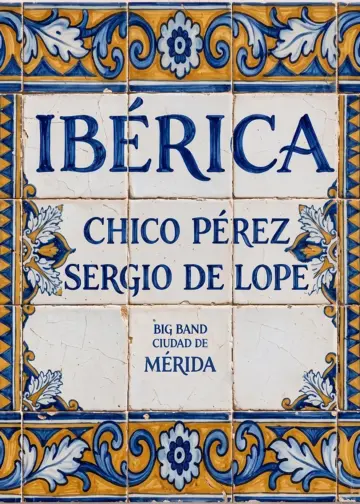
Ibérica - Chico Pérez & Sergio de Lope
cds de flamenco

«Ibérica» – Chico Pérez & Sergio de Lope

Ibérica es el nuevo disco del pianista Chico Pérez y del flautista y saxofonista Sergio de Lope, dos artistas que ...

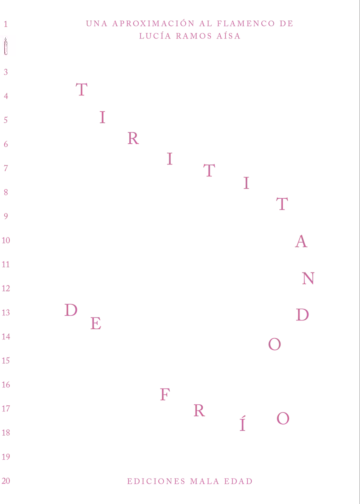
Tirititando de frío de Lucía Ramos Aísa
libros de flamenco

«Tirititando de frío» Lucía Ramós Aísa (libro)

Una aproximación al flamenco de Lucía Ramos Aísa La periodista Lucía Ramos Aísa narra sus vivencias en el flamenco a ...

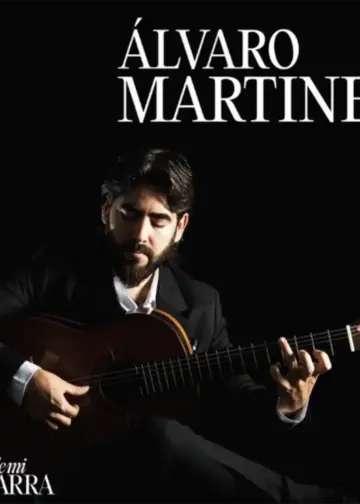
Álvaro Martinente - Sonidos de mi guitarra
cds de flamenco

Álvaro Martinete – Sonido de mi guitarra CD

Álvaro Martinete nace a la música en una tierra que por sí sola es música. Una música que envuelve a ...

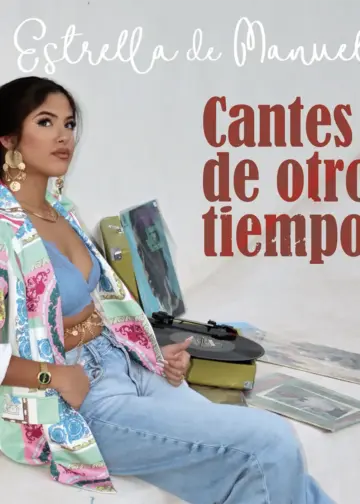
Estrella de Manuela - Cantes de otros tiempos CD
cds de flamenco

Estrella de Manuela «Cantes de otros tiempos» – CD

Juventud, divino tesoro. Con apenas diecinueve años y tres discos en el mercado, la aventura de Estrella de Manuela no ...

Nuestro Twitter - Síguenos

Recomendamos

Villanos del Flamenco
Sáb, 20 Jun 2026 - Dom, 12 Jul 2026

Villanos del Flamenco

Mont de Marsan - Festival de arte flamenco
Mar, 30 Jun 2026 - Sáb, 04 Jul 2026

Festival Arte Flamenco de Mont-de-Marsan

Jue, 02 Jul 2026

JESÚS CARMONA «BAILE DE BESTIAS» Villanos del Flamenco

Vie, 03 Jul 2026

CHANO DOMINGUEZ, ANTONIO SERRANO, EL NEGRON TRIO – Villanos del Flamenco

¡No hay eventos!
Facebook Twitter Pinterest Instagram Youtube Twitch Telegram

Aviso Legal / Política de Privacidad / Uso de Cookies
Condiciones de Uso y Normas de Publicación de Anuncios Clasificados

¡Atención! SUSCRIPCIÓN COMPLETA a través de Wordpress.com
Introduce tu correo electrónico y recibirás un email por cada entrada que publiquemos.


Newsletter (envío boletín mensual con Mailchimp)


¿Quiénes somos?
Soporte, publicidad y patrocinio

Mi Cuenta

© 2024 Deflamenco.com - ADN Flamenco Web Services S.L.

Welcome Back!

Login to your account below

Forgotten Password?

Retrieve your password

Please enter your username or email address to reset your password.

Log In
No Result
View All Result
  • REVISTA
    • Noticias de Flamenco
    • Reseñas
    • Entrevistas
    • Especiales
    • Festival de Jerez
    • Opinión
    • De tablao en tablao
    • Moda flamenca
    • Más flamenco
  • AGENDA
    • Flamenco en Madrid
    • Flamenco en Barcelona
    • Flamenco en Andalucía
      • Flamenco en Sevilla
      • Flamenco en Jerez & Cádiz
      • Flamenco en Málaga
      • Flamenco en Córdoba
      • Flamenco en Jaén
      • Flamenco en Huelva
      • Flamenco en Almería
      • Flamenco en Granada
    • Flamenco en España (resto)
      • Flamenco en Aragón
      • Flamenco en Asturias
      • Flamenco en Baleares
      • Flamenco en Canarias
      • Flamenco en Cantabria
      • Flamenco en Castilla la Mancha
      • Flamenco en Castilla-León
      • Flamenco en Ceuta / Melilla
      • Flamenco en Extremadura
      • Flamenco en Galicia
      • Flamenco en La Rioja (Logroño)
      • Flamenco en Murcia
      • Flamenco en Pamplona
      • Flamenco en el País Vasco
      • Flamenco en Valencia
    • Flamenco en Europa
      • Flamenco en Francia
      • Flamenco en Alemania
      • Flamenco en Países Bajos & Bélgica
      • Flamenco en Italia
      • Flamenco en Reino Unido
      • Flamenco en Portugal
      • Flamenco en Suiza
      • Flamenco en Resto de Europa
    • Flamenco en América
      • Flamenco en Canadá
      • Flamenco en Estados Unidos
      • Flamencos en México / Centro América
      • Flamenco en América del Sur
    • Flamenco en el Mundo
      • Flamenco en África
      • Flamenco en Australia
      • Flamenco en Japón & Asia
    • Flamencos EN GIRA
  • CURSOS
    • Cursos Flamenco online
    • Calendario Cursos de Flamenco (general)
    • Cursos Flamenco en Sevilla
    • Cursos de Flamenco en Jerez & Cádiz
    • Cursos Flamenco en Madrid
    • Cursos flamenco en Barcelona
    • Cursos Flamenco en Málaga
  • ARTISTAS
    • Cantaores & cantaoras
    • Guitarristas
    • Bailaores & bailaoras
    • Otros/Grupos
    • Compañias
    • Espectáculos
    • Management
  • MEDIA
    • Twitch – Flamenco live
    • Fotografías
    • Videos
  • GUÍA DE FLAMENCO
    • Escuelas y estudios de Flamenco
    • Tablaos flamencos
    • Teatros, Salas de Concierto
    • Peñas de Flamenco
    • Bares Flamencos, restaurantes
    • Moda Flamenca, complementos
    • Tiendas de Flamenco
    • Guitarrerias, luthiers
  • CATÁLOGO
    • Cds de flamenco
    • Libros de flamenco
    • Dvds de flamenco
    • Vinilos de Flamenco
  • Tablaos
    • Noticias
    • Madrid
      • Donde ver buen flamenco
      • Cardamomo
      • Tablao Flamenco 1911
      • Tablao flamenco La Carmela
      • Tablao Las Carboneras
      • Tablao de la Villa
      • Las Tablas Flamenco Madrid
      • Centro Cultural Flamenco de Madrid
      • Café Ziryab
      • Corral de la Moreria
    • Barcelona
      • Tablao Flamenco Cordobes
      • El Duende by Tablao Cordobes
    • Granada
    • Sevilla
  • [ENGLISH]
    • News
    • Show Reviews
    • Interviews
    • Special Reports
    • Flamenco Shows in Madrid
      • Cardamomo Flamenco Madrid
      • Tablao 1911
      • Las Tablas Flamenco Madrid
      • Centro Cultural Flamenco de Madrid
      • Corral de la Moreria
      • Café Ziryab
    • Flamenco Shows in Barcelona
      • Tablao Flamenco Cordobes
      • El Duende by Tablao Cordobes
    • Special Festival de Jerez
    • Flamenco fashion
    • More flamenco
    • Opinion
    • My Flamenco Year
  • Publicidad
  • –

© 2024 Deflamenco.com - ADN Flamenco Web Services S.L.

Utilizamos cookies para asegurar que damos la mejor experiencia al usuario y obtener estadísticas en nuestro sitio web. Si continúa utilizando este sitio asumiremos que está de acuerdo. Más info: