Bienal de Flamenco 2010
 
HOME - Deflamenco.com   search
10th September 2010
map shopping cart help


“Viaje al Sur”
Ballet Flamenco de Andalucía

Jueves, 4 de mayo, 2006. Teatro Villamarta, Jerez de la Frontera. 21.00h


Dance: Cristina Hoyos, El Junco. Bailaoras: Susana Casas, Cristina Gallego, Rosa Belmonte, María del Mar Moreno, Rocío Alcaide, Lucía Guamido, Zaira Santos. Coros de ballet: José Luis Vidal, Jesús Ortega, Jacob Guerrero, Javier Crespo, Daniel Torres, Abel Harana, Juan A. Jiménez. Singers: Reyes Martín, Vicente Gelo, Miguel Rosendo. Guitarists: Andrés Martínez, Ramón Amador. Percussion: Roberto Carlos Jaén.

Text: Estela Zatania

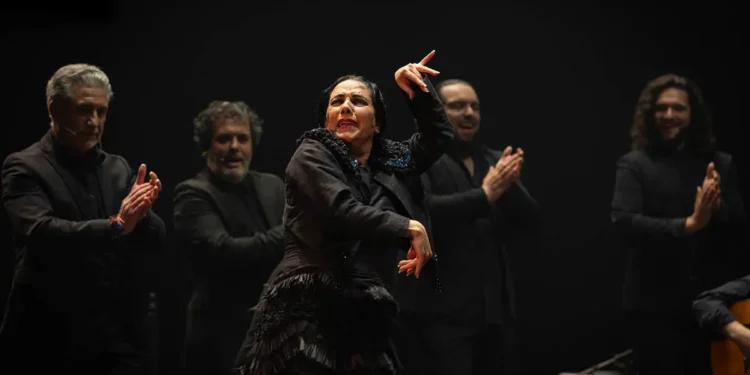
Under the direccion of Cristina Hoyos, the Ballet Flamenco de Andalucía, formerly known as the Compañía Andaluza de Danza, came to the Villamarta Theater in Jerez with its latest work “Viaje al Sur”. Premiered in March 2005 at Cordoba’s Gran Teatro, passing through the Málaga en Flamenco festival and presented at New York’s City Center as part of a promotional campaign sponsored by the Andalusian Ministry of Tourism, Commerce and Sports, the extravagant show finally came to the toughest venue of all, managing to fill about two thirds of the seats in the venerable theater.

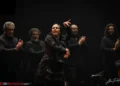
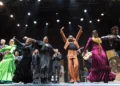
The show’s scope, its specific aspirations and the generous budget did not augure well for profound moments of great subtlety, but little by little we’re learning to assimilate each flamenco manifestation without an excess of intellectual or nostalgic baggage. The curtain goes up to reveal the entire company, stock still and staring out into the audience. The silence is broken by the voice of Cristina Hoyos who requests a minute of silence in honor of master choreographer José Granero who passed away just a few hours earlier. This sober and unexpected opening was the introduction for the first of three movements which make up “Viaje al Sur”.

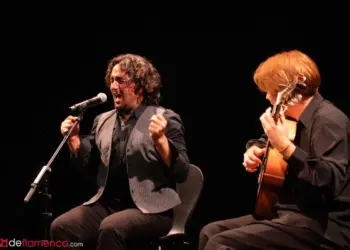
The trio of voices manages to get just the right blend of traditional and contemporary

Manuela Vargas may have been the first dancer to explore the concept of groups of related dances – tonás with siguiriya with serranas, alegrías with romeras with mirabrá, soleá with romance with caña – over forty years ago when an adolescent Cristina Hoyos was a member of the company. In Viaje al Sur, Hoyos reworks the idea with a show that aims to express “La Alegría”, “La Tragedia” and “La Pasión” through dances, music and colores which share a certain affinity.

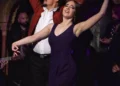
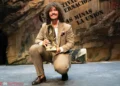
With a wardrobe in tones of peaches and cream, pale violet, honey and milk, the first movement is a delicious celebration of uncomplicated pleasure expressed via a flamenco waltz in major key, guajira, zapateado and alegrías. Cristina takes on some chuflas, the humorous half-spoken half-sung form in pure Cádiz style, but the sassy attitude so important for pulling it off, escapes her. No matter, we’re content to appreciate the visuals, the compás and the best of intentions. In this block of dances, el Junco is outstanding with his alegrías, the only strong solo dance in the entire work. He serves up polished technique and an impeccable style but we’re left wishing he’d deviate from the rigid script to see what his svelte figure is capable of. The singers are not great stars, but highly competent and the trio of voices manages to get just the right blend of traditional and contemporary.

Good visuals, compás and the best of intentions

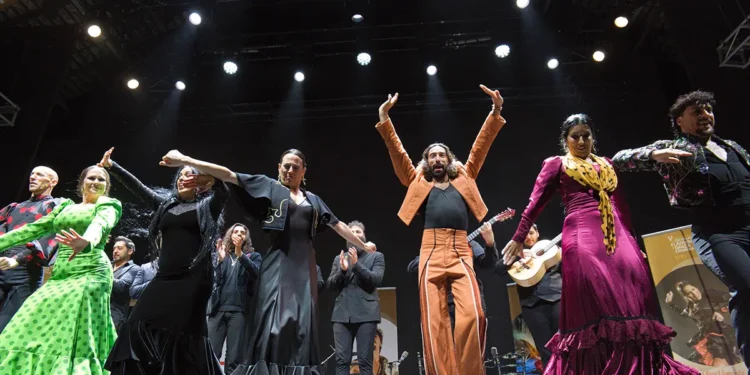
The trip changes direction and color and we enter into a world of grey and black to evoke “La Tragedia”, a sort of jondo-suite that includes soleá, soleá por bulería, tonás and flashes of serrranas. A brief free-style introduction by Cristina leads into group dances that begin to be tiresome. The trick of “many bodies moving as one” gets old very quickly and you long to see something, anything other than seven females and seven males exhibiting their ability to surpress their personalities for the common good. The tedium is aggravated by a certain sparseness of vocals. The most noteworthy event was when the entire corps de ballet appeared playing castanets, a percussive element in danger of extinction ever since it became fashionable to reject anything which might possibly be interpreted as “corny”. Perhaps it’s not too late to also bring back the bata de cola as an requisite accessory for female dancers.

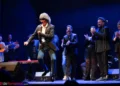
Relief might have come with “La Pasión”, the red portion of the show, but the momentum of the first movement is never recuperated. The audience delights with “Gracias a la Vida” to bulerías as recorded by María Jiménez years ago, and Alejandro Sanz’ “Corazón Partío” to tangos produces a collective spasm of delight to nearly end the show. All that’s left is the meticulously choreographed fiesta finale which belies its own function as improvised curtain call.

The bottom line is “Viaje al Sur” is a professional, visually rich, well-prepared piece of work, free of emotion and apt for all audiences.


Store in Madrid - Contact - Advertising - Subscribe
deflamenco en tu email
pago seguro. Tienda on-line flamenco
© 2003 Tintes Flamencos S. L. Todos los derechos reservados - CIF - B83546655.
Included in the Official Registry of mail-order businesses (NEVA) 2003/0337/13/28/4/V
Design by Krama, Madrid