Bienal de Flamenco 2010
 
HOME - Deflamenco.com   search
10th September 2010
map shopping cart help


XXXVI Reunión de cante jondo de La Puebla de Cazalla

Saturday June 10th, 2004. 11.00pm. Hacienda la Fuenlonguilla, Puebla de Cazalla
 

Cante: Raúl Montesino, Carmen de la Jara, José Valencia, Diego Clavel, José Menese, Luis el Zambo, Pansequito.
Guitar: Manuel Herrara, Antonio Carrión, Pedro Carrasco ‘Periquín’.
Dance: Rafael de Carmen

At a time when festival organizers are scrambling to find new formulas for preserving these happenings that have been livening up summer evenings throughout Andalusia ever since the nineteen-sixties, in La Puebla de Cazalla time seems to be standing still in the best sense of the phrase.

No festival is more respectful of tradition

The patio of the Fuenlonguilla hacienda situated on the outskirts of town is the perfect setting to fulfill the noble intention of offering a dignified festival of high quality where knowing how to listen is as valued as the cante itself. No giant screens, no fireworks, no international stars as guests of honor. As the emcee Juan Ortiz Ordóñez said with corresponding pride: “There is no festival more respectful of tradition”.

Guitarist Antonio Carrión opened with a guitar solo as is the custom in La Puebla. This is one of the most sought-after guitarists to play for traditional singers due to his vast knowledge of cante, and he’s doing a fine job cultivating his solo career as well. He played bulerías with a fresh modern approach, incorporating some old falsetas and never resorting to avant-garde excesses his peers often indulge in.

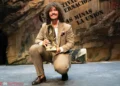
José Valencia

Local singer Raúl Montesinos launched the first “ay” of the evening with the brilliant young guitarist Manuel Herrera accompanying. The singer’s clean, sweet sound worked granaína, cartagenera and taranto with excellent results, but that same dulcet voice was less appropriate for siguiriya and tientos tangos.

Luis el Zambo feeling good as only he can feel,
with the complicity of Niño Jero

Singer Carmen de la Jara added a touch of Cádiz, accompanied by Antonio Carrión. Mirabrá with alegrías, an assortment of tangos, free-style fandangos recalling some classic styles, finishing with “chuflas de Cai”, a series of bulerías from when Cádiz was Cádiz and Pericón, Ignacio Espeleta and Manolo Vargas were roaming the streets with their abundant good humor.

Young José Valencia from Lebrija is one of the most sought-after singers by the biggest stars of flamenco dance, from veteran Manuela Carrasco, to Farruquito himself. With the accompaniment, Jerez sound and moral support of guitarist Niño Jero, he took on the trilogy of soleá, siguiriya and bulerías, exhibiting impressive knowledge in the first two without actually finding his voice, and doing an exemplary job with the latter.

Diego Clavel’s discreet fame and his long career, “the most honest and straightforward in flamenco” as the emcee said, conceals a personality capable of doing with siguiriyas what others only dream of. He expertly applied his hushed lament to cantiñas, a form which always benefits from the minimalist treatment Clavel gives, then granaína and siguiriyas to close.


Diego Clavel

Pansequito: flamenco style, originality and an elegant flamenco voice

After a brief intermission, Manuel Herrera offered a guitar solo por soleá, devoid of novel tunings and surprise chords, a tribute to the maestro Sabicas who continues to be current among young guitarists fourteen years after his passing.

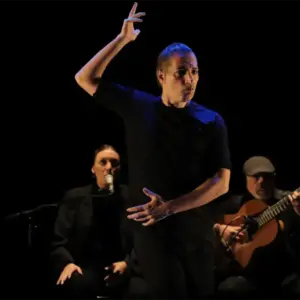
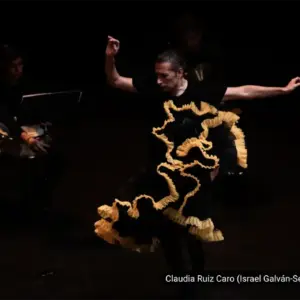
The dance portion of the night was not up to the level of other years. After becoming accustomed in earlier editions to the likes of Antonio el Pipa, Manolete and Manuela Carrasco, the singular lack of subtlety, the uncontrolled acrobatics and the excesses of Rafael del Carmen por alegrías combined for the most disappointing performance of the night.

Old hand José Menese came on next to put order and bring us back to the spirit of the festival. He began without guitar with a lovely ‘cante de trilla’, a traditional farmer’s worksong “from a tape Paco Toronjo gave me”. With the guitar of Antonio Carrión he revived caracoles, excelled with serranas, was competent with tientos and exhibited his encyclopedic knowledge por soleá and siguiriya.

Carmen de la Jara - Antonio Carrión
Luis el Zambo

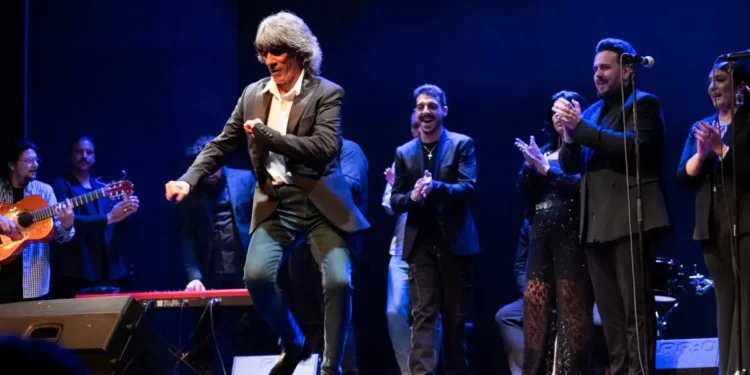
The spirit of Jerez flamenco made its appearance in the person of Luis el Zambo. Soleá por bulería mixed with soleá with the unmistakable short phrasing of his hometown, but the singer wasn’t quite at ease. For siguiriya he found his way and was splendid with classic styles of Jerez such as Paco la Luz and el Loco Mateo. Free-style fandangos, and bulerías to finish of, feeling good as only Luis can feel, with the complicity of Niño Jero.


In an interview some thirty years ago, elderly singer Periñaca confesses that she doesn’t quite like “that new kid...Camarón de la Isla”, but “that other one…that Pansequito guy…his singing is raw and flamenco”. Flamenco fans never conceded the point and the young man from la Isla was crowned king of cante by an entire generation which left the eternal role of pretender to the throne to his good friend from El Puerto. Nevertheless Pansequito continues to exhibit the flamenco style, originality and elegant flamenco voice that won him a special prize for “spirit of renewal” at one of the early editions of the Concurso de Córdoba. The underrated singer interpreted alegrías with all the flavor it deserves, soleá with perfectly recognizable styles reworked in the most personal fashion, ending out of character with taranto and cartagenera to give way to a somewhat forced bulería finale where we were deprived of Diego Clavel’s little dance, and Rafael de Carmen put the acrobatic touch.

As in customary in this festival of festivals, the night wound up at five thirty in the morning with dimmed lights and absolute silence but for the chirping of a cricket which gave the rustic touch to the round of tonás cantes in which each of the singers participated. The emcee’s words at the beginning of the evening make an apt epilogue:

Deja al flamenco volar
por muy lejos que se vaya
Que siempre se ha de parar
en la Puebla de Cazalla
Let flamenco fly away
as far as it may go,
It must always come to stay
in Puebla de Cazalla


Text & Photos: Estela Zatania

More information:

XXXV Reunión de Cante Jondo - 2003


Store in Madrid - Contact - Advertising - Subscribe
deflamenco en tu email
pago seguro. Tienda on-line flamenco
© 2003 Tintes Flamencos S. L. Todos los derechos reservados - CIF - B83546655.
Included in the Official Registry of mail-order businesses (NEVA) 2003/0337/13/28/4/V
Design by Krama, Madrid